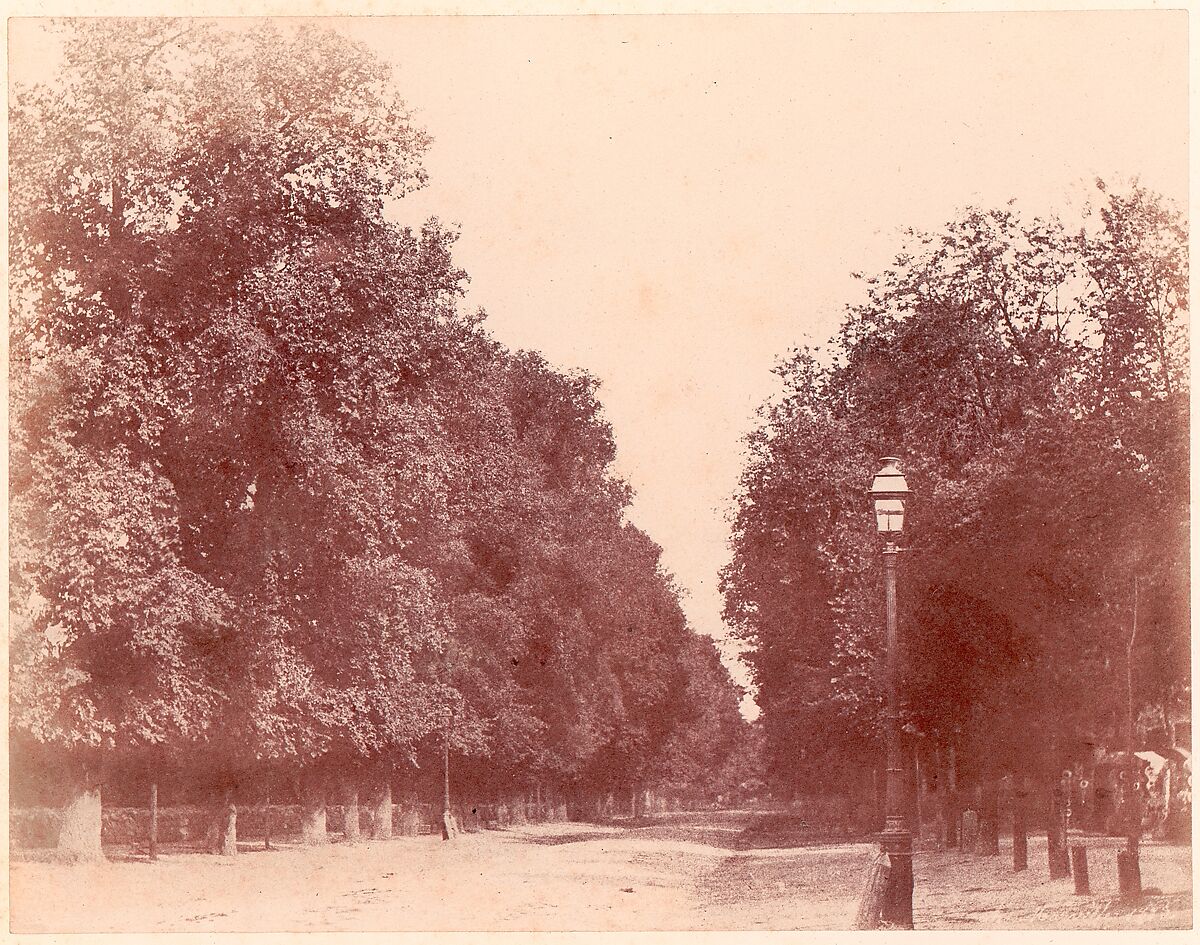
‘Bright. An opening. Repeated lines.’ The words could describe a silver bowl, with light on its rim and a pattern worked into its side. They could also describe a tree-lined avenue, where a bright opening lies between two rows of trunks. In associative remote viewing, someone may have to decide which image those words describe. That decision becomes a prediction.

What the archive establishes
Jon Ronson’s 2004 book and Grant Heslov’s 2009 film made American military interest in psychic claims a familiar story. The film is a fictional adaptation. The historical record shows that US agencies funded remote-viewing research and operations from the 1970s into the mid-1990s. In 1995 the American Institutes for Research reviewed both the experiments and the operational work. Statistician Jessica Utts judged the experimental evidence sufficient to establish what she called psychic functioning. Psychologist Ray Hyman accepted that some statistical findings needed explaining and disputed that they established a paranormal capacity. The operational finding was firmer. Reports were too vague and inconsistent to provide actionable intelligence.1
How two images become a forecast
In a typical associative remote viewing (ARV) trial, two images are assigned to two possible outcomes. The viewer, who has seen neither image, records words and sketches intended to describe the image they will later be shown. A judge compares that record with both candidates. The outcome assigned to the closer match becomes the forecast. After the event, the viewer is shown the image associated with what actually happened. Some protocols let the judge pass if the match is too weak or if several viewers’ records point in different directions.2
The method gives researchers a forecast they can record before the event and score afterwards. It also makes the judge part of the experiment. A report of ‘an opening’ can be read as an object’s rim or as a break in a landscape. Remote-viewing manuals call the viewer’s own leap from fragments to a named object ‘analytical overlay’. The term describes a risk recognised by practitioners. The judge faces a related problem when looking for correspondences across two rich images.3
In a 2021 study, Debra Lynne Katz and colleagues took 220 records from 86 completed trials and asked blinded judges to score them again. All nine judges agreed in just six of the 86 trials. Eight of nine agreed in a further 17. The original judges made more accurate calls than the new judges in this sample. The team registered the re-judging in 2017 using trials that had already been completed. The study tests whether the judgement can be repeated from the same material. It leaves open why the original judges did better.4
Short runs and longer records
Accounts of silver-futures experiments in the 1980s describe an early success and a failed continuation. The published accounts differ on financial details. In a 1995 silver-market pilot, six of seven forecasts were correct on trials treated as trades. There were nine trials in all, two passes and zero actual trades. A 2014 Dow Jones study reported seven correct calls in seven trials, with real trades whose returns were affected by the mechanics and timing of the trades.2 5
Over 13 years Greg Kolodziejzyk recorded 5,677 individual trials and reported 52.65 per cent correct. Those trials were grouped into 285 questions, of which he reported answering 60.3 per cent correctly. He served as both viewer and scorer. Project Firefly, involving more than 60 viewers and several variants of ARV, reported 48 per cent correct across 177 foreign-exchange forecasts. Of the US$56,300 pooled by 62 members, US$4,114 remained. Firefly was a field project, and its trading arrangements contributed to its losses. How often a call is right and how much money it makes are separate questions.6 7
A 2023 review found an average positive effect across 36 remote-viewing studies, with considerable variation in results and methods. It covered remote viewing broadly. In a separate 2010 mass-participation experiment, none of the four blind-judged trials identified the correct target. The published record contains positive results and failures across quite different procedures. It leaves the reliability of ARV as a forecasting method unsettled.8
What could arrive from the future?
Even if a result held up in independent trials, the protocol would raise another question. What was supposedly perceived: the event, the image assigned to it, or the later experience of seeing that image? A 2019 study of the German DAX index reported 38 correct calls in 48 valid trials and found no statistically significant difference between its feedback and no-feedback conditions. One study of that size cannot settle whether feedback matters. To distinguish these possibilities, an independent test would need to vary future feedback separately from the event, fix its judging rules in advance and publish the misses and passes alongside the hits.9
Return to the bowl and the avenue. If we see only the image that fits, the words can seem remarkably specific. Place the two images side by side and the same words leave room for a second reading. An experiment that asks whether something came from the future has to make room for both before the result is known.