Frame the question.
A useful question gives the reading a subject without demanding that the cards deliver a verdict. Shuffle in any manner that feels natural, then draw without searching for the card you expect.
OBJECT 001 / TAROT COLLECTION
An illustrated tarot for readers, collectors and the symbolically curious.
The complete 78-card tarot, selected art cards and prints bring the Society’s first illustrated collection from the screen into physical form.
Pre-orders open · A$149 including standard shipping within Australia
The complete 78-card tarot includes a compact first-edition guide. International shipping is calculated at checkout.
Expected dispatch from 24 November 2026. Christmas delivery cannot be guaranteed, particularly for international orders. We will provide an update if the dispatch timing changes materially.
Designed by Navatu Studio for The Sic et Non Society.
Sold and fulfilled by Navatu Studio through secure Shopify checkout. Card payments will appear as NAVATU.COM.AU.
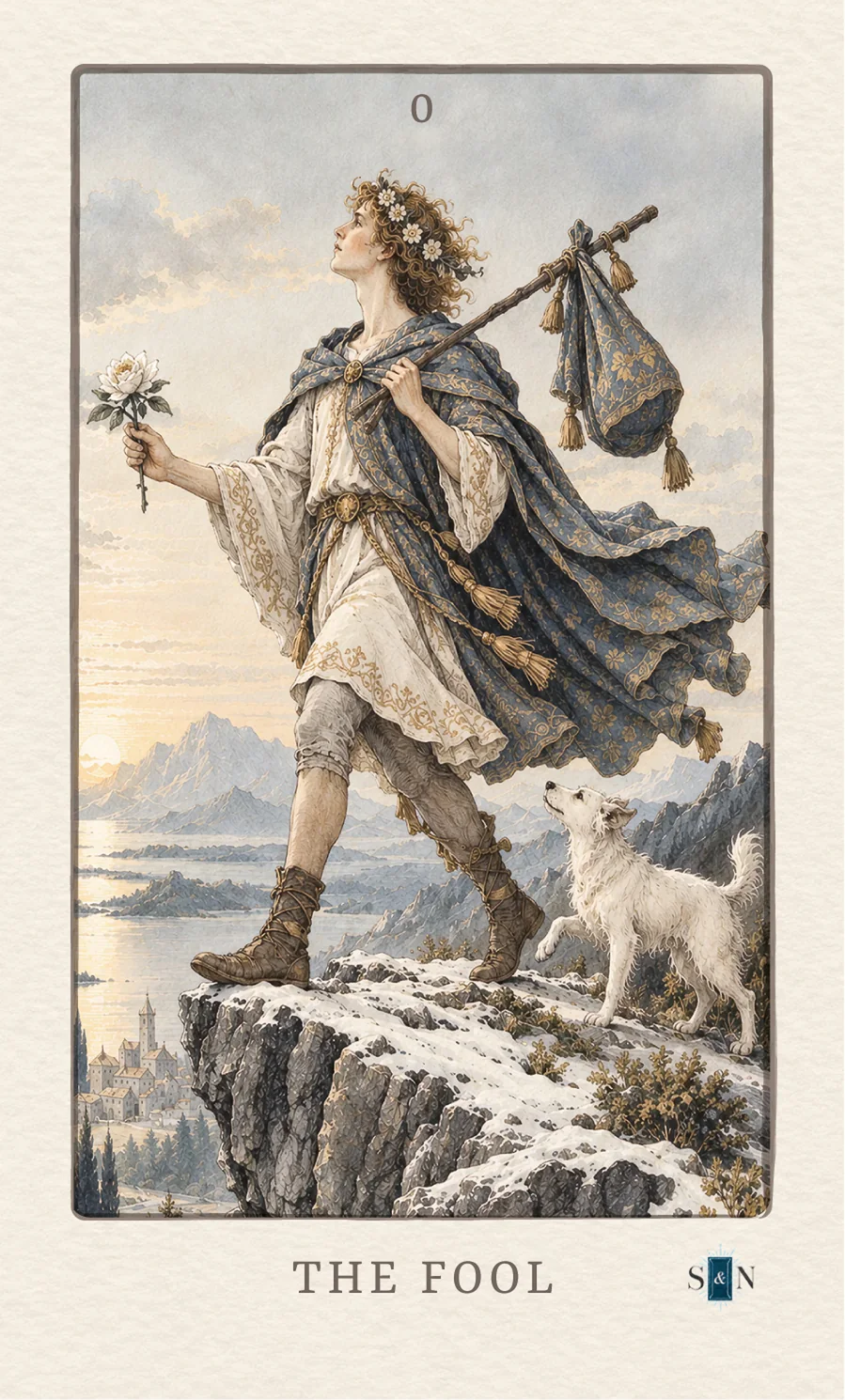
SELECTED CARDS
Select a card to bring it forward. Website previews are shown at reduced resolution.
THE COLLECTION
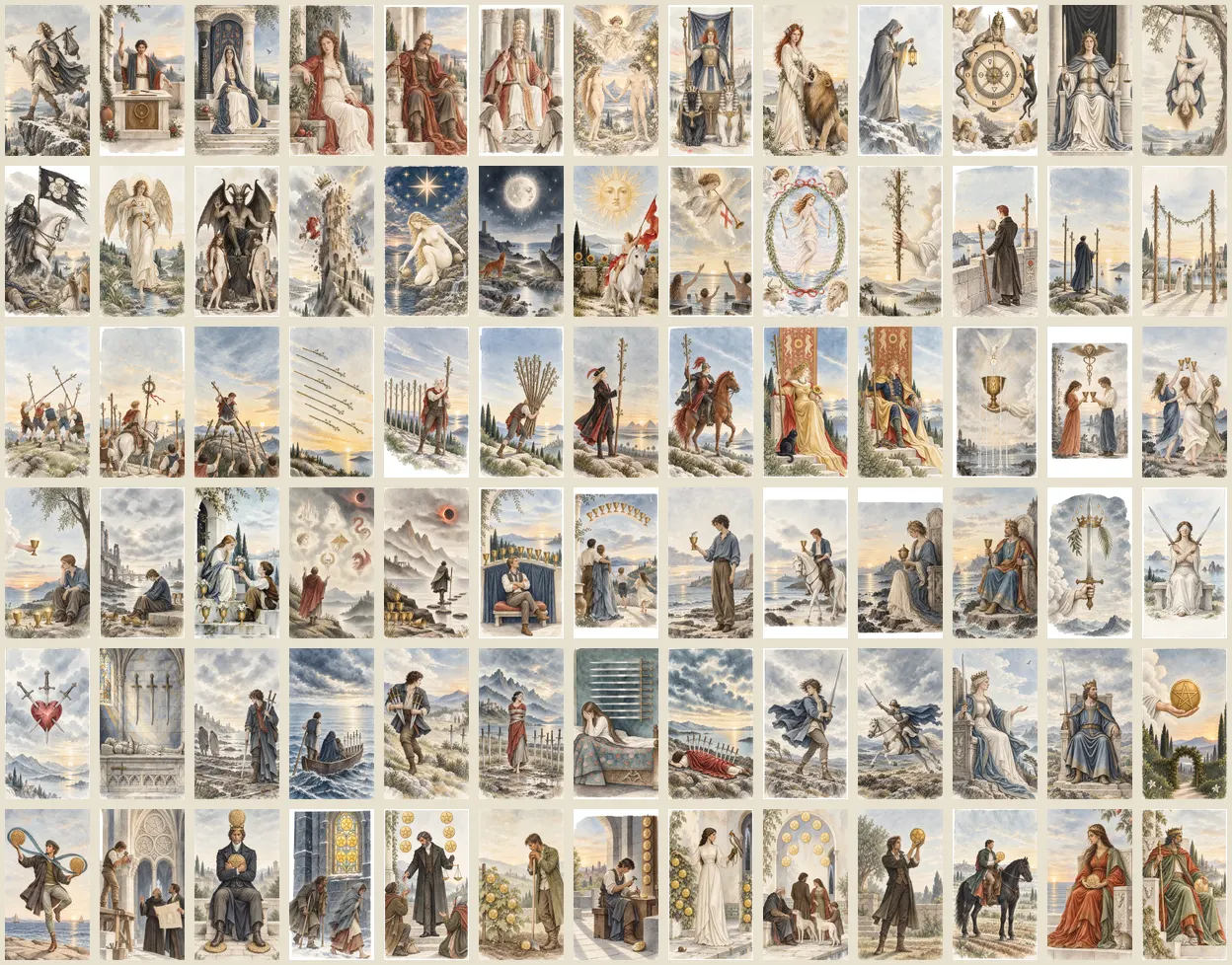
The Sic et Non tarot inhabits a world somewhere between the familiar and the imagined.
Its landscapes are caught in the uncertain light of dawn and twilight, when forms emerge slowly from shadow and the ordinary becomes faintly otherworldly. The palette is restrained: pale skies, weathered stone, muted colour and occasional passages of gold.
The visual language draws inspiration from Trecento Italy, the allegorical beauty of Botticelli, the architecture and ornament of the Alhambra and the dreamlike imagination of the French Symbolists. Subtle futuristic details prevent the collection from belonging wholly to one period.
The illustrations retain the symbolic foundations of the Rider–Waite–Smith tradition without attempting to reconstruct a particular historical period. The aim is a place that feels remembered, even if it has never existed.
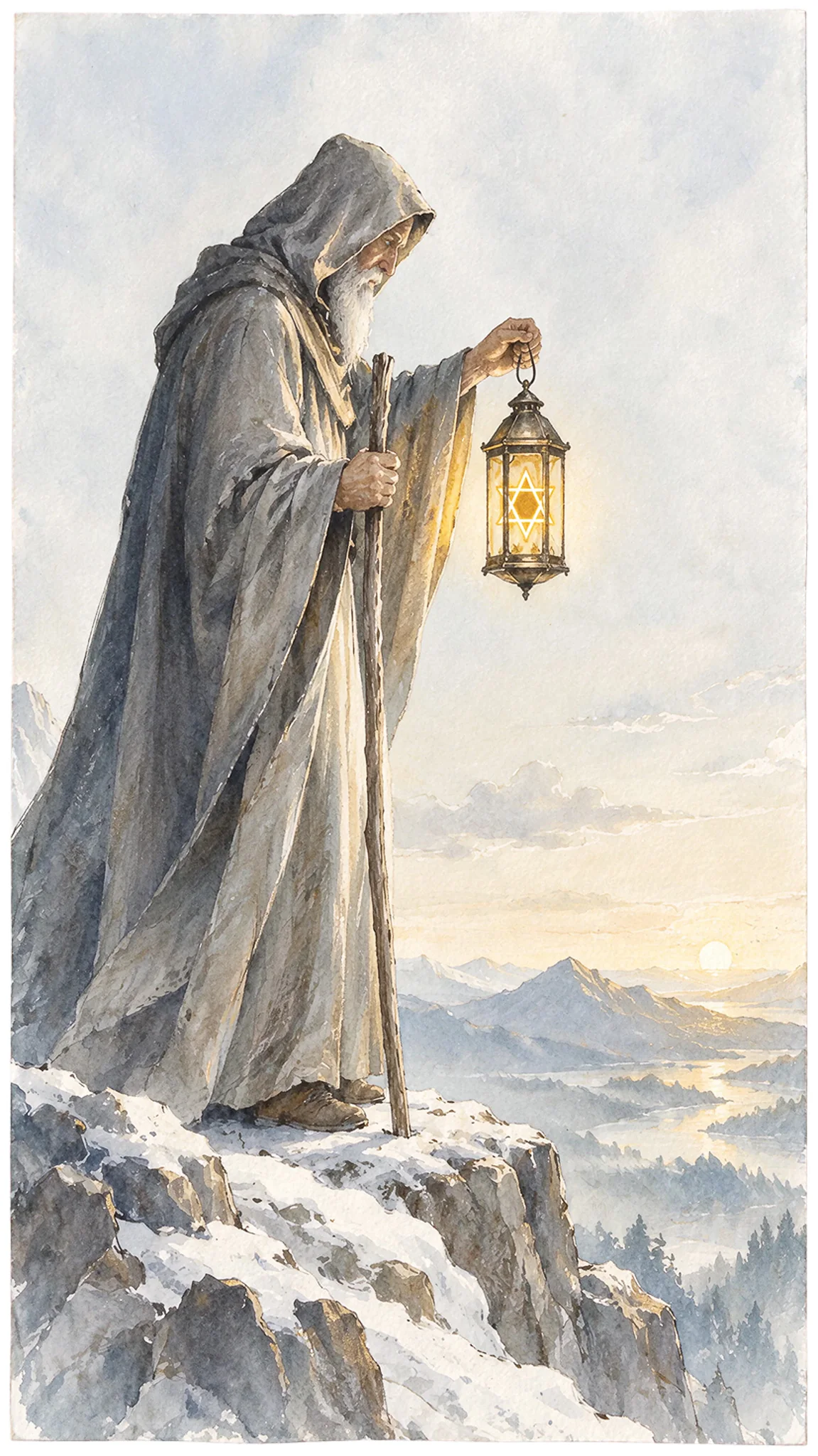
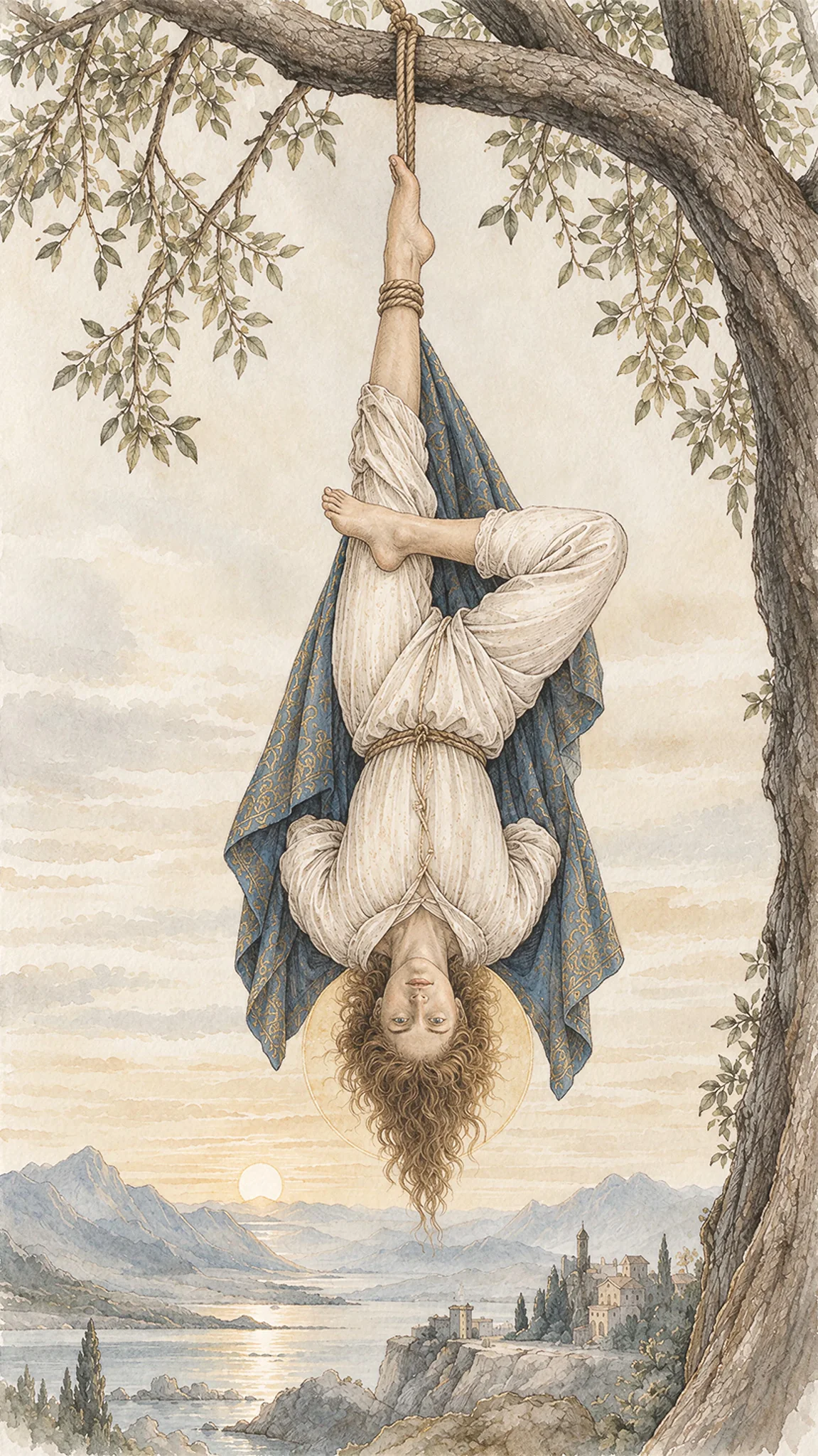


THE REVERSE
The griffin back is rotationally balanced. Turned through 180 degrees, it presents the same composition, so the card does not disclose whether it is upright or reversed before its face is revealed.
The griffin unites the eagle and the lion. It appears across ancient Mediterranean and Near Eastern art and later became associated with guardianship in medieval Europe: an apt keeper for a deck concerned with images, knowledge and interpretation.
The swirling ground draws on the fine-veined marbled papers associated with Italian bookbinding. Traditional marbling suspends colour on a liquid surface before transferring the pattern to paper; Italian makers became known for dense, branching veins. The deck back is a contemporary design informed by that tradition, rather than a reproduction of a particular historical sheet.
Background: decorated papers at The Metropolitan Museum of Art and marbled paper in the V&A National Art Library.
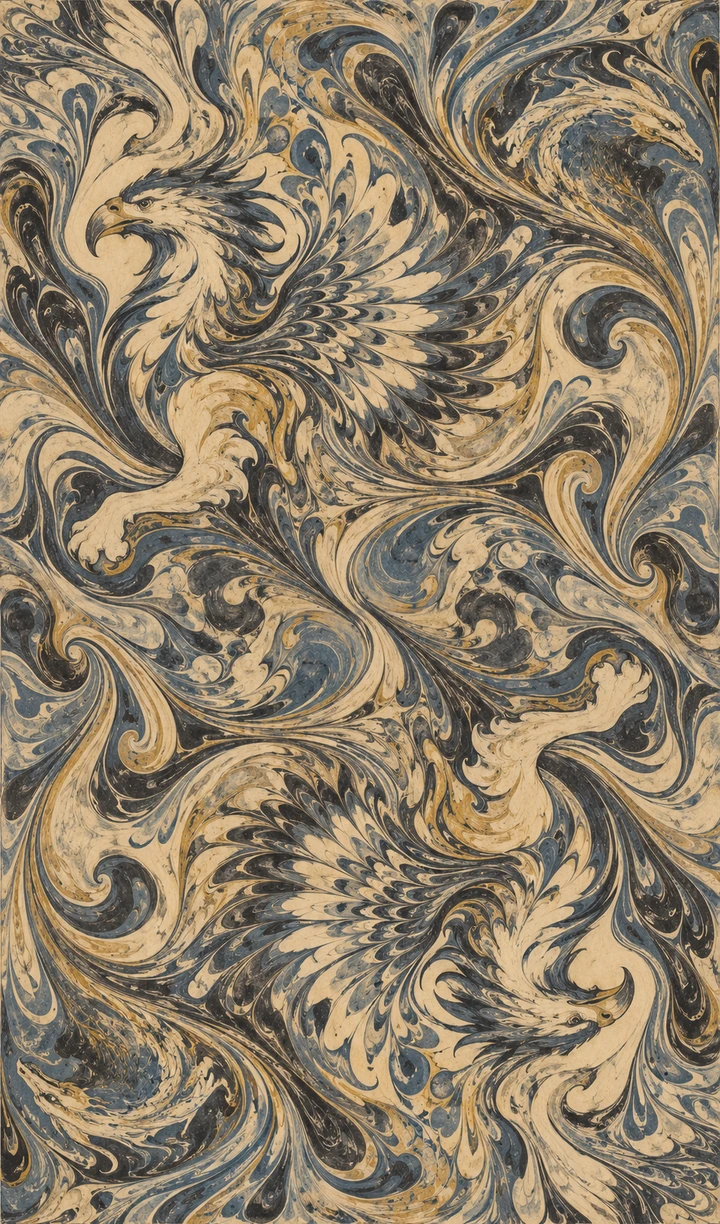
The collection combines research, art direction, AI-assisted image generation, editorial selection, digital compositing, retouching and colour work.
Each card has been reviewed against Rider–Waite–Smith iconography and refined as part of a complete visual system, with attention to symbolism, atmosphere, consistency and print presentation.
PHYSICAL EDITIONS
Selected art cards and gift prints will be available shortly, with further objects announced only as they become ready.
USING THE DECK
A useful question gives the reading a subject without demanding that the cards deliver a verdict. Shuffle in any manner that feels natural, then draw without searching for the card you expect.
One card may be enough. A traditional three-card sequence can be read as Past, Present and Future; the third card is better treated as a direction or possibility than an unavoidable prediction.
Attend first to what is pictured, then to the suit, number or court and the card’s place in the arrangement. Court cards may describe a person of any sex, a recognisable character or a way of acting relevant to the question.
FORTHCOMING PUBLICATIONS
The enclosed booklet is a beginning, not the whole library.
A fuller practical guide to reading the cards is planned, with more space for questions, card relationships, traditional spreads and the construction of a complete reading.
Separate essays and longer studies will examine individual cards, historical sources and the changing life of symbols in art, literature and belief. Some of this work may later be gathered into a book. Publication details will be announced when the material is ready.
The Reading Room will continue to provide free digital readings and individual card interpretations as this work develops.
THE DIGITAL DECK
The Open Deck offers the complete illustrated collection online. Draw at random, choose a card deliberately or arrange the cards on a table of your own.